
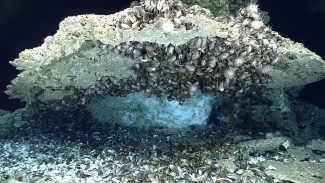
Georgia Tech researchers have uncovered eco-friendly bacterial proteins that stabilize methane clathrates, offering a green solution to climate challenges and potential implications for astrobiology.
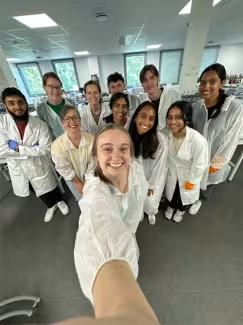
This summer, eight students in the Biomolecular Engineering, Science, and Technology study abroad program in Lyon, France were able to explore the city's rich history of silk production in an unlikely place: a biology lab.

The College of Sciences graduate students were chosen as 2023-24 Herbert P. Haley Fellowships for their research and academic achievements
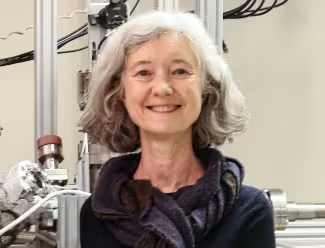
Physicist Claire Berger has been awarded the Chevalier dans L'ordre des Palmes Académiques for her groundbreaking graphene research — and her work on strengthening ties between U.S. and French scientists.

This fall, the Institute will launch a foundational, interdisciplinary program to lead in research related to neuroscience, neurotechnology, and society.

A study led by researchers at Georgia Institute of Technology has advanced understanding of airborne particulate matter and its health effects.
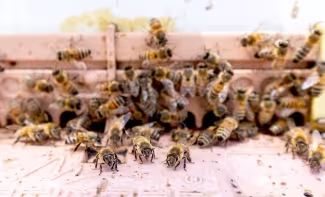
In response to changing climates, many plants and animals are moving to higher elevations, seeking cooler temperatures. But a new study finds that flying insects like bees and moths may struggle with insurmountable issues to this escape route.

As part of an $11.6 million research initiative, Biological Sciences postdoctoral fellow Sarah Orr will leverage a new USDA Fellowship to study the impact of synthetic pesticides on bumblebees — a key pollinator for U.S. agricultural production.
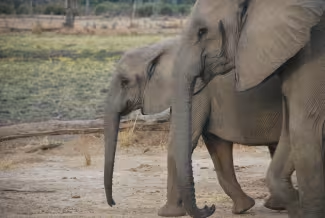
Their novel approach showed how mammal traits evolved with changing environments over time and revealed factors that contributed to biodiversity loss.
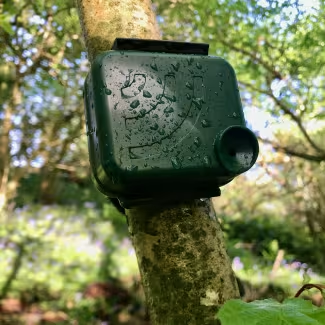
Scientists at the Georgia Institute of Technology and Max Planck Institute for Intelligent Systems in Stuttgart have published a perspectives piece on the different tools used throughout the world aiding in the conservation of wildlife and biodiversity.