

The researchers used data to investigate natural divisions in bacteria with a goal of determining a viable method for organizing them into species and strains.
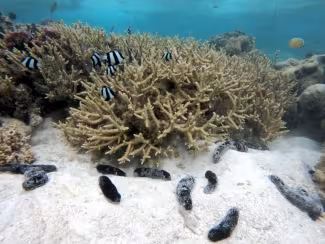
In a first-of-its-kind study, the researchers discovered that sea cucumbers protect coral from disease.
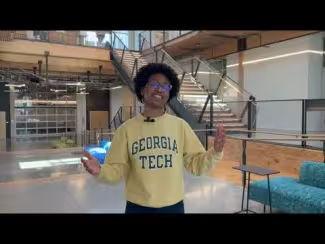
The campus community is invited to participate in a week of events that increase awareness of and encourage actions that advance the 17 United Nations Sustainable Development Goals.

This year brings another February 29. Why do leap years occur?

Energy materials facilitate the conversion or transmission of energy. They also play an essential role in how we store energy, reduce power consumption, and develop cleaner, efficient energy solutions.
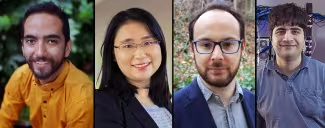
Sloan Fellowships are among the most prestigious awards for early career faculty
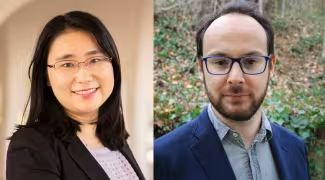
Alex Blumenthal and Chunhui (Rita) Du are among 126 early-career researchers who have been awarded Sloan Research Fellowships for 2024.

Georgia Tech chemists are exploring the behavior of a complex protein associated with glaucoma — characterizing one of the largest amyloid-forming proteins to date.
Paving the Way for Critical Mineral Production

The Natural Products Reports Lectureship is awarded annually to an outstanding early-career researcher who’s research and contributions relate to natural products, small molecules produced by living things.