

A Georgia Tech study challenges a decades-old explanation for one of neuroscience's most famous signals, revealing an intrinsic neural code for tracking time.
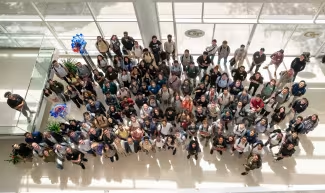
Georgia Tech surpassed 200 startup teams for the first time, marking a record-breaking year for entrepreneurship through CREATE-X and Quadrant-i.

Four Georgia Tech doctoral students spent the summer working on their dissertation research through the Energy Policy and Innovation Center's (EPIcenter) Summer Research Program.

The Georgia Tech researcher and longtime neuroscience community leader will help catalyze new collaborations and research opportunities across the Institute for Neuroscience, Neurotechnology, and Society (INNS).

Using unprecedented observations of Ukraine’s 2023 Kakhovka Dam collapse, Georgia Tech researchers found that widely used flood models underestimated both water levels and flood timing.
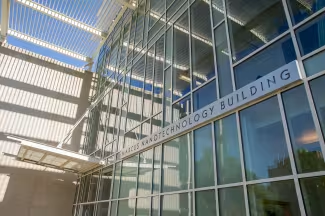
The Institute for Matter and Systems will provide support for three new and four renewed research projects to advance materials, devices, and processes.
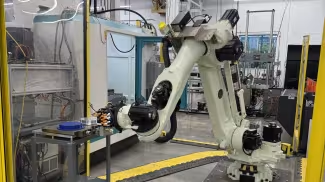
The cloud lab will give researchers nationwide remote access to Georgia Tech’s Advanced Manufacturing Pilot Facility, pairing AI with autonomous experimentation to accelerate new materials discovery.

Regents' Professor Facundo M. Fernández will collaborate on research in mass spectrometry, an analytical technique used to measure the mass-to-charge ratio of ions for research.
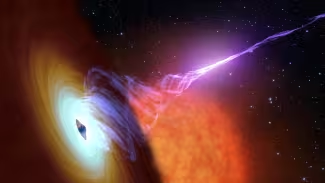
From new calibration tools to a record-breaking catalog of detections, the LIGO–Virgo–KAGRA (LVK) detector network is leading the way in gravitational wave science.

Research suggests that vast mats of smelly seaweed may have entered a self-sustaining cycle, effectively feeding their own expansion. It’s creating a chronic disaster for the affected coasts, with little sign of ending.